The Real Cost of Low-Quality Insulation: Cold Homes and Higher Bills
Not All Insulation Is Equal. See What Really Keeps Your Home Warm.
Opting for cheaper, lower-quality insulation might save you money today, but it can lead to disappointment down the track— wondering why the house isn't retaining heat in the way you had imagined a new home would. Many New Zealand homes suffer from poor thermal performance simply because the insulation was chosen based on only meeting R Values and cost rather than effectiveness.
The calculator shows you what the price tag doesn’t: How different insulation options stack up when it comes to warmth, moisture control, and energy efficiency. Avoid the false economy of budget insulation—make sure your home is built to keep the cold out and the comfort in.
Free Calculator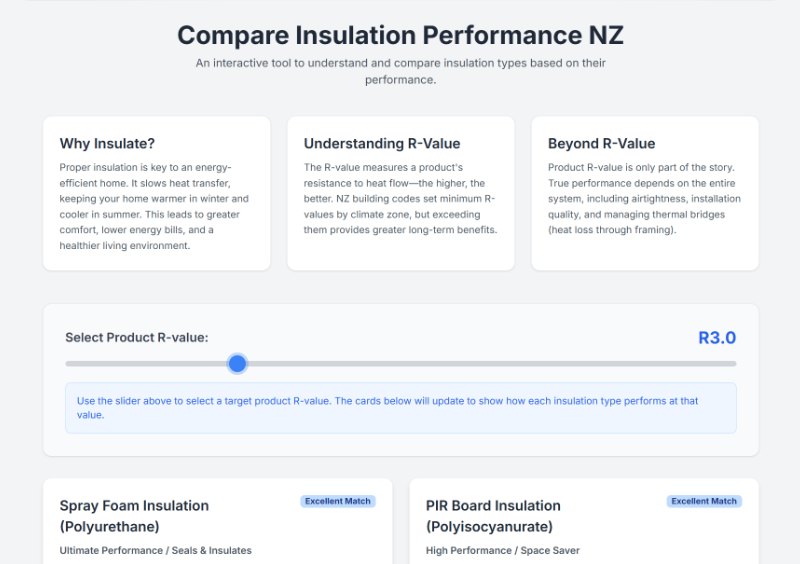
Why Insulate?
Insulation Performance NZ
Proper insulation is key to an energy-efficient home. It slows heat transfer, keeping your home warmer in winter and cooler in summer. This leads to greater comfort, lower energy bills, and a healthier living environment.
Read More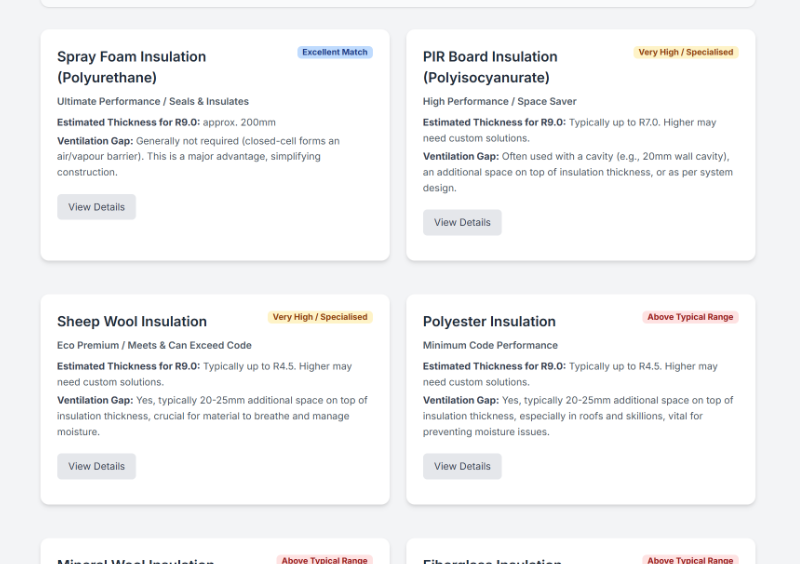
R-VALUE
Understanding R-Value
The R-value measures a product's resistance to heat flow—the higher, the better. NZ building codes set minimum R-values by climate zone, but exceeding them provides greater long-term benefits.
Read More